Thursday, April 30, 2015

Entry #6: The Power One Has Over Another


I read Pamela E. Barnett's essay titled "Figurations of Rape and the Supernatural in Beloved" in which she describes how she viewed the book Beloved while reading it through a feminist lens. Barnett believes that rape was not seen only as a matter of gender but as a matter of race as well. I agree with this being true during the time of slavery. Slaves were not considered human to white people so they found many ways to dehumanize them. One way of doing this was to rape them and use them as an object of sex. This was also dehumanizing them because white people were not getting their consent before sex resulting in their feelings being disrespected and ignored.

One common stereotype of rape is that the men are usually the ones committing rape, but as Barnett points out, in this book Beloved commits an act of rape. Barnett mentions when Paul D found himself having sex with Beloved even though he didn't want to.  Paul D says it's something he can't control and he tells Sethe "that girl is doing it" referring to Beloved. Barnett believes that Beloved must be some sort of supernatural character due to her controlling powers and unusual habits such as always having to drink water. I agree with Barnett and believe Beloved is a reincarnation of the baby Sethe killed. Beloved arrived to 124 by walking out of water which could be seen as a symbol of a baptism. The disappearance of Beloved at the end of the book also brings up the suspicion that Beloved must be supernatural. Sethe, Paul D, and Denver eventually have a hard time remembering Beloved was ever at 124 perhaps due to Beloved's control she has over their minds. Overall, I agree with many of the points Barnett made and I have benefited from learning that I share the same ideas as someone else who has read Beloved through a feminist lens.

Entry #5: Respect the Milk

"I'll tend her as no mother ever tended a child, a daughter. Nobody will ever get my milk no more except my own children. I never had to give it to nobody else--and the one time I did it was took from me--they held me down and took it. Milk that belonged to my baby. Nan had to nurse whitebabies and me too because Ma'am was in the rice. The little white babies got it first and I got what was left" (236).


While reading this passage through a feminist lens we can see the motherly nature of Sethe and how she cares for her children no matter what. At the end of the day her love for her children is strong. Sethe is a protective mother who wants nothing to happen to her babies. She wants them all to herself, allowing nobody to touch them or go near them except her. She wants to be fully dedicated to her children and care for them with everything she has. One thing she wants to make sure she can provide for them is her milk, even though her children are grown now and no longer need to drink the milk of their mother. The milk represents a connection between a mother and her baby and it develops a relationship between the two.

To learn more about the mother-baby bond through breast-feeding please read this TIME article.

Sethe also feels the need to do provide her children with her milk because of the guilt she feels from when she allowed men to drink from her breasts at Sweet Home. She was the only female slave at Sweet Home while there were several other men there. They always fought over who could have Sethe and wanted to use her for pleasure. One day two men drank from her breasts and that was the only time someone other than her children drank from her, "and the one time I did it was took from me." Women are often seen as a sex symbol and men only enjoy women for their body and the sexual pleasure they can get from them. Women can provide a lot more than sexual pleasure but that is often overlooked. This was true centuries ago when men were drinking from women's breasts and it is still true today when men go to clubs to have one night stands and use women simply for sex, never to talk to them again.

A Final Reflection- Erin

Reading this book was an experience. At times it was a really disturbing experience as some of the details in the book were especially unnerving. But the history of the novel were very evident throughout the book. But what I most learned from this book was the importance of facing your past. The theme of the book is that people are burdened with their past and they must face it to move forward. Sethe was so consumed by the guilt of killing her daughter that she felt like she had to be punished. This is evident when she wouldn't move from the haunted house and when she kept trying to justify her actions to Beloved. The psychological effects of past pain is forever but people cannot keep living in the past. Denver is able to move forward when she confronts herself and the outside world that she was once so scared of. Paul D was able to move forward when he was able to open the rusty tin box of his heart. And Sethe, at the end, was trying to protect her children like she should have, attacking the white person instead of killing her children.

The history in this book is astounding. It directly confronts all the pain and inhumanity of the slave trade and the effects of the people afterword. This is not in any history textbook or class. This book can really open up a person's eyes to the institution of slavery. Also as I was reading the articles I looked at the text in different ways. I was really surprised when I was presented with the story of Margaret Garner. Sethe's story of killing her children was based on a real life story that became one of the most ground breaking fugitive slave trial of the pre-Civil War period. Looking through at this book through the New Historian lens gave me more information about slavery. But reading other peoples blogs helped me see the book through other lens's that made this book very relevant because this book is about confronting our past. Everyone has memories that they would rather forget but if we continue to focus on them then we lose our chance in the present. We should remember the past but we should not let it consume us.

Image result for margaret garner

Slave Narrative-Erin

This article, Revisions, Rememories and Exorcisms: Toni Morrison and the Slave Narrative by Cynthia S. Hamilton, describes the multiple books that have been written about the institution of slavery and the dehumanizing practices. It discusses the structure of a typical slave narrative, bringing multiple examples. They describe the story telling process and the limitations of some of the authors. The typical structure of a slave narrative, according to the article, is that the plot is chronologically linear. the protagonist learns the full horror of slavery, tries to escape multiple times, achieve freedom at a cost and then tells us what it is like to be free. Hamilton does acknowledge that many slave narratives were limited by the white audience as the authors had to make the book agreeable to them. The early slave narratives were about victimization of the slaves while the later books celebrate the accomplishments made since their emancipation. These books all pander to the abolitionists, focusing on the cruelty, not on "the power dynamics and the unequal relationships" (Hamilton, 433). The typical slave narrative "[scarifies} the rich complexity of the slave's experience to the needs of propaganda" and augments white power  (Hamilton, 435).

Beloved is different. Morrison breaks the classic slave narrative by using the gothic as her main frame for the novel. She also directly confronts sexual violence, a topic that previous authors did not touch much on before, and shows how the psychological effects of this event inhibit Sethe's ability to nurture her child. The timeline is also not linear. The reader has to piece together the events through the memories. The way that Morrison handles the narrative allows more feeling and psychology to be seen and given more emphasis. Victimization is never a theme in Beloved. Instead we focus on how others help one another to deal with past pain, anger, and shame brought upon them from their slavery. Morrison also shows the effect of the warping dower of white domination on the black community and how they help each other heal from it. Baby Suggs brings the community together in her clearing and tells them that they have to love themselves and each other because of what the white folk did to them.

Morrison critiques the past slave narratives through her book by breaking the mold and presenting the book in a way that does not make the protagonists victims. The gothic elements of the book are seen multiple times. The ghost baby and the gothic villain in Schoolteacher, and the flawed personalities of the characters. This book combines the slave narrative and the gothic masterfully making a book that critiques the inhumanity of slavery in a more powerful way then previous slave narratives.


This is it. Final Blog of the Year.


A lot has happened in Beloved and it was really mind boggling, eerie, heart breaking at times, and sometimes confusing. With the flashbacks into Sethe's past and the constant search for clues to understand Sethe's and Beloved's behaviors, the novel Beloved ended up being a completely mysterious and creepy book that still had some charm just like Beloved herself. Some of the main themes I took away from the book were the patterns of the different relationships in Beloved, sacrifice, and the hardships slavery put on African American mothers and their children.

Beloved offers a new perspective in how women's lives were during that time. Most books only talk about the torture slaves had to suffer through, but none give a perspective like Toni Morrison has about women slaves. Morrison delved into the sacrifices a mother had to give, the pasts that they ran from, and the future they did anything to stay away from. Specifically Sethe had to give up her children and the happiness they would've brought her, parts of her sanity, and love for most of her life. Using a psychoanalytic lens to analyze what the characters were thinking when, for example Beloved made her way through their lives, really allowed me to figure out characters motivations and fears. When analyzing how Sethe reacted to Beloved joining their family, she had no problem. Mainly at first it was because she would never turn down someone running from slavery (like she believed Beloved was doing), because she knew exactly what it's like to run from torture. But then later on Sethe learns that Beloved is truly her daughter because of the tune she heard Beloved humming, which she and her children only knew because Sethe made it the song up. The way Sethe reacted was surprising to me, because I would expect her to be shocked that Beloved has found a way to be with her in a human form instead of a ghost. But Sethe was ecstatic and she finally felt true happiness. Which makes me connect her reaction to motherly instinct and motherhood during slavery. Beloved's return was a chance for Sethe to provide her maternal instincts to the child she could never raise, because slavery took that chance away from her.

One thing I find interesting is how Denver feels around Sethe. Denver is nothing like Beloved, regarding how she feels about Sethe. It seems like Denver is scared of Sethe, instead of loving her. Ever since Denver discovered that her mother was sent to jail because of the information she found out from Nelson Lord, which was that Sethe killed her daughter Beloved. Since then Denver has feared her, which is why I believe Denver is so attached and protective to Beloved. There's no reason as to why Denver could think that Sethe will not kill her children again after she has already done so to Beloved. Denver's fear of Sethe has lead her to become an independent woman, which we see in her actions like seeking out education herself and going into town to embrace the community she was shut out from all her life. So Beloved's return was sort of an opportunity for Denver. 

Overall Beloved was an eerie and mysterious book that had me rereading pages throughout the whole book, while trying to take in all the clues, history, and emotions of the characters in Beloved. The characters in Beloved all have their past that relates to who they are, like Stamp Paid's name relating to his time helping slaves to freedom. Even though Beloved is now gone from their lives, the history of what all the characters endured has an impact on who they grew to be.

Thanks for sticking with me and my blogs!

-Halemah Shuman

Wednesday, April 29, 2015

Critical Expert Blog #6: The Heartbreak of Motherhood in Slavery

Text: Motherhood in Toni Morrison’s Beloved: A Psychological Reading
Critical Lens: Psychoanalytic

In Sandra Mayfield's essay she defines Beloved as a novel that mainly focuses on motherhood, but also slave women as mothers. Mayfield delves into how motherhood has affected Sethe since she was a slave. Sethe was long affected by the horrors of slavery and she did not want her children to endure the same tortures she did as a slave. To further her analysis Mayfield uses opinions from other authors to provide insight and information on how motherhood can psychologically impact Sethe.

In the start of the article Mayfield manages to use the writings of Sarah Moore Grimke as evidence to support the horrors that slave women endured from their owners. In her Letters on the Equality of the Sexes and the Condition of Woman, Addressed to Mary S. Parker, President of the Female Anti-Slavery Society Grimke says "the virtue of female slaves is wholly at the mercy of irresponsible tyrants, and women are bought and sold in our slave markets, to gratify the brutal lust of those who bear the name of Christians”. Her statement displays how slaves were not regarded as humans who have rights and emotions, and the women slaves were not only forced into manual labor but they also had to endure the lust of their slave owners. This and the things Sethe endured in Beloved is the reason why she did not want to bring children into the world. She did not want to grant herself the happiness of bringing a child into the world, because she knew that there will eventually be pain and sorrow for the both of them.
Sethe herself lost her mother to the horrors of slavery and she knew that if she were to not escape her children might have to deal with the same grief. But it is well known that there is an unbreakable bond between a mother and her child. So when Sethe does have her children she doesn't want to give them up, but in a way she did lose all but one child to the fears of her past as a slave. But she knew for Beloved that in a way death for her child is much better than the horrors of slavery.
In Mayfield's article she uses evidence from psychoanalytic experts, and one quote from a literary critic named Jacques Lacan caught my attention said " the child‟s wish to be “totally captivating, to be everything for the (m)other”. This reminded me that motherhood is not only for the mother, but it also displays the relationship between her and her children. And this quote shows the relationship that Beloved had for sometime with Sethe. This can be seen in chapter 23 when we get a chance in Beloveds mind and she claims Sethe as hers, she repeats "You are mine You are mine You are mine". Which displays to us that Beloved truly wanted to be everything her mother wanted and more. But of course Sethe's past as a slave did not make it possible that she could have that relationship with her daughters, mainly because she can not move from the horrors of her past and the fear that her children would have to endure the same.

So Mayfield's article truly did allow me to relate to most of her claims about motherhood and slave mothers. Her integration of other sources made it possible for me to tie in the possible thoughts and feelings of Sethe as a slave mother through a psychoanalytic lens.

Out on a ship-Close reading-Erin

 "We are not crouching now   we are standing but my legs are like my dead man's eyes   I cannot fall because there is no room to    the men without skin are making loud noises   I am not dead   the bread is sea-colored   I am too hungry to eat it   the sun closes my eyes   those able to die are in a pile [...] the woman is there with the face I want   the face that is mine   [...] if I had the teeth of the man who died on my face I would bite the circle around the neck   bite it away   I know she does not like it" (249)

In this passage we get a glimpse into the mind of Beloved herself. The passage could be interpreted in many different ways. One way could be a grave full of the angry black dead. Some believe that it is a metaphor for an inescapable womb. I believe that Beloved is describing the conditions on a slave ship from the perspective of a women. The description fits almost all slave ships that participated in the Atlantic Slave Trade.

"There is no room". This quote describes the tightly packed conditions slaves were forced to endure. Every inch of the cargo hold was crammed to hold as many slaves as possible. They were left without adequate room or breathing space. They could not lie down or even change positions. In one description of a slave ship the space was so tight that many of the slaves died of suffocation. The condition were inhuman and allowed diseases to breed and spread. This left many slaves dead and/or emancipated. The slaves were then put in a pile or thrown overboard. Because these conditions were so intolerable many slaves chose to kill themselves as they believed that their souls would return home.

Another historical quote in this passage is "the circle around [the lady's] neck" as many slaves were chained in their ships so they would not escape. These chains were also dehumanizing techniques as they were chained like wild animals. The description Beloved gives above is of slave ships from the collective memory of slavery. This gives an idea of the dehumanizing conditions that slaves were put through.
Image result for slave chains on slave ship

Here is a long but good video about a slave ship:


For information about the slave trade and its impacts check out the video below:

Tuesday, April 28, 2015

Entry #4: The Power of Women


Reading Beloved through a feminist lens has allowed me to see each character differently than I would have if I read it through another lens. I have found it very interesting to see the power structure between the men and the women during the time period that it takes place in and how that changes over time. Sethe was a slave who eventually was freed and she went through a long journey to find her new home. Sethe was pregnant with her last child, Denver, and she had to walk miles and miles. She became so tired out she nearly died. However, a white woman came to save her and helped her give birth rather then leave her to die and lose her baby. This allowed me to see the strength that Sethe has, she hit rock bottom but she did not give up. Even though one of her children died, and two ran away from her leaving her with one child left, she does not complain and she continues to go through her daily life even though it may be tough.

The fact that a white woman, Amy Denver, helped Sethe and saved her life really interested me. This showed a sense of unity between women, no matter the color of their skin women still stick together because they know what it's like to be a woman. Even though Amy did not know exactly where Sethe was coming from, she still felt the need to help her out and bring her to shelter. Amy did not understand the scar on Sethe's back and where it came from bought she saw it as a beautiful symbol and a sign of a new beginning.

Baby Suggs is a powerful women as well through her preaching. When Baby Suggs was freed from slavery she tried to figure out what she could as a free woman. She was a woman of many talents and could easily succeed in many careers. She decided to do her preaching in the woods at a rock. This was not a very common position for a woman and it shows how much influence she has over others. Many look up to her and come up to her for advice because she is full of wisdom.

Entry #3 Responding and Reflecting

I believe that gender roles are shown and confused clearly in Toni Morrison’s Beloved. Through the feminist lens, this is something seen in Beloved because the main character is a woman slave. Slaves are depicted as property, and during the time period of Beloved, women did not have the same rights as men. Men controlled every action of women, and they did not have independence from the household. Women were in charge of the household and the kids. Beloved was in the Civil War time period of American history was a time when women did not have the same rights as men. The author writes about how the main character, Sethe, has a kid and a dead kid, but she does not have a husband, so she is a single mom. Because Sethe is a single mom, she has to take care of both kids by herself, and there is no male person to provide for the mom. When the old slave friend of Sethe, Paul D, comes back into her life, he does not provide for her but instead wants Sethe to help him, like a man would provide for a woman. This is because Paul D needs Sethe, and Sethe does not need Paul D.

Circular Metaphors: Expert Lens Blog #5


Text: Circularity in Toni Morrison's Beloved by Philip Page
 Critical Lens: Psychoanalytic Lens
..............................................................................................................................................

The "Circularity in Toni Morrison's Beloved" by Philip Page raises many interesting ideas about what went through Toni Morrison's head as she wrote this novel. Page compares Morrison's writings to each other and he finds that she writes in sort of a circular pattern. He explains it as circles and more circles that allow the reader to see the repetition that happens in many of Morrison's books. In Beloved there are different circles of sorrow, love, and pain. Which is why Page belies that "repetition and therefore circularity is a major theme of the novel". This is a very general theme to the novel, but from what I understand it opens up the knowledge of different and smaller themes in the book like the different types of relationships, the meaning of water, and the importance of motherhood. These smaller themes are related to repetition in the book because there are circles of different relationships, because they repeat. Most relationships in Beloved have a pattern where they are together and then they separate and get together again, it is a circular pattern which we can see throughout Beloved.

One thing Page also explains is that "a circle can either be destructive or constructive, confining or fulfilling", which we can see throughout the novel in the different relationships between the characters. For example we could see the confining relationship between Beloved, Sethe, Denver, and Paul D when Beloved held at least one of their attention at every point of the day and stopped them from truly being a happy family. Denver was also confined at home by Sethe, because of the fears Sethe has of the outside world and the need for protecting her only alive daughter. We can also see the destructive relationship between Paul D and Beloved. From the start Paul D knew there was something wrong about Beloved, but he still couldn't resist her supernatural charm. And her charm is what ruined Paul D's relationship with Sethe because Beloved was able to distance them from each other so she can have a close relationship with Sethe. An example of a fulfilling relationship is when Sethe is finally content with having her girls there with her in her home, with no fear of them being taken from her. Sethe's dreams were also fulfilled when she discovered that Beloved is truly her daughter who has came back from the dead, when she hears her hum the song she made just for her children. So as we can see there are many different types of relationships just between those four people alone. Not only that, but these relationships repeat constantly throughout the book which does support Page's theme.

Philip Page's writing has informed me of the repetition that Toni Morrison manages to constantly incorporate in Beloved. The knowledge of this theme has opened up my mind to realize different themes in the book, like the ones I have been touching on throughout this blog post.

Thanks for reading!
-Halemah Shuman

Image result for circles pattern Image result for circles pattern Image result for circles pattern

Entry #2


In Beloved there are a lot of things that relate to the Feminist lens. For example in first few chapters Sethe has a flashback about the slave owner people in the past raping her. This relates to the feminist lens because she was having her milk taken from her. The milk is not a metaphor, but a literal meaning of her fertility milk. This is the milk that is used for babies to grow. This part of the story is important to the feminist theme because Sethe was not worried about her rape, but she was more worried about the milk being lost. In the time period of Beloved, there was no science to help the pregnancy process, so there would be no way for Sethe to get more pregnant milk. Women were not treated well during this time period because it was during the Civil War. It did not help much that Sethe was also a slave because she does not have any rights because she is considered a piece of property. So when Sethe was raped, she was not focused that she was being raped but because she was losing her milk. This is important to the feminist lens because it is the interest of the child rather than the interest of herself. Sethe puts her children before her own personal health.

Slave Song-Erin

This article analyzes the use and the history behind the slave songs in Toni Morrison's Beloved. The author compares Morrison's book to Fredrick Douglass Narrativehow the Douglass does not try to use emotional writing because of the time period he is writing in and how Morrison is not constrained by this. The use of the slave song is very important according to this article. The song defines the slaves humanity and tells their specific story. Multiple times the article references specific passages in the book where the song was used to define the slave. The songs are also specific to a slave's experience. When Sixo was captured after he attempted an escape he sang to affirm his humanity in front of the white men and gives his "ultimate projection of the human experience" (Capuano, 101). The slave songs used throughout Morrison's book are used to define a slave's humanity and heal the protagonists. 
Image result for frederick Douglass's narrative

This article widens my understanding of the book. As I was reading it I did not know to even look for the songs. The article tells the history and the importance of slave songs and their importance in the book. Knowing about the historical importance of the singing mentioned in the book. With this in mind reading the book becomes a different experience. I can now note when singing appears in the book and analyze how it relates to the protagonists humanity. The songs can also relate to how the slaves want to survive and live their now free lives. Paul D sings to survive in the prison chain gang. There Paul D's humanity is violated every day and he has to sing to survive and eventually live. This relates to 12 years a slave where a free man is made a slave. In the video below we see a slave song where Northup, the protagonist, affirms through the song that he want to live, not just survive. 

Slave songs are an important historical reference for this book because the songs show how a rich culture survived and thrived under the yoke of slavery. Slave sung to survive the hard work and the dehumanizing techniques used against them. They also became messages for freedom and a call to escape. Eventually these songs became the basis of blues, jazz, and rock and roll. The slave songs used to help the slaves survive another day became a part of our culture. Image result for slave songs


Entry #3: The Twisted Love of a Mother


I read an essay by Terry Paul Caesar who read Beloved through a feminist lens just as I did. Caesar explored the relationship between mother and daughters and how it plays out between Sethe and Beloved. He as well explored what a mother is and what a daughter is and what they can do for each other. Caesar talks about how Sethe killed her baby to save both herself and her child. Sethe saved herself from the responsibility and the attachment of her baby because it felt like "slave work". Sethe saved her baby from having to go into slavery. At the time, black women eventually had their children taken away from them or sold and they usually didn't get to determine their child's future. Sethe wanted to control what happened to her children so she went to the extreme and ended the life of one of her kids.

After reading this essay I have found that reading through a certain lens results in multiple interpretations. I never thought of Sethe killing her baby as a way for her to save herself. The duty of a mother felt like slavery to her all over again. She had to clean, feed, and raise the child, and in some way that child was her owner. She belonged to that child and it was her responsibility to care for it. Reading this essay also allowed me to the relationship between Sethe and Beloved in a new way. Beloved has come back because she wants to kill Sethe. Beloved wants to get back at Sethe for everything she has put her through and hopes to show her misery in return. I can now see how a daughter can control her mother's life and affect the outcome of her future just as the mother can do to the daughter.

Monday, April 27, 2015

Reflecting on the the Past and Present

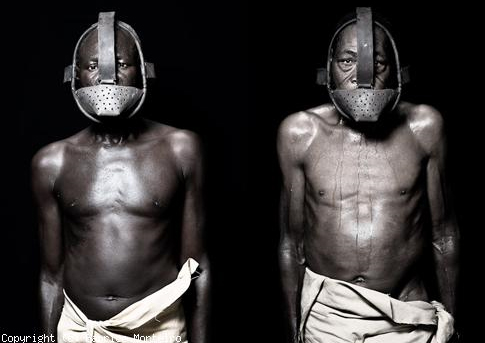
Beloved, in my opinion is a book largely about slavery and the effects of it on society. A large portion of the novel is focused towards the life and equality these ex-slaves have in their communities after they leave the plantations in hopes for a better life. In a very real description of the Black community, the book hopes to address that a colored man is just like any other and not property or livestock. However a larger portion of the book is about slavery and the dehumanizing and unthinkable tactics used to make the slaves’ life like hell. In the eyes of many, like Schoolteacher, these humans are worthless and as good as animals. In Paul D’s situation, he had an iron bit stuck to in his mouth, preventing him to communicate with his friends and fellow slaves. This form or torture reduces down to something that would be done to an animal. Another character that faces unethical treatment is Sethe. Schoolteacher ask her nephews to steal Sethe’s breastmilk, something that would be done to a cow.


Reading beloved through the psychoanalytic lens has brought me realize what the hardship was for these people a mere 200 years ago. Through this book is fiction, it would not surprise me if these events did not take place in real life. This book seems very real in the descriptions and details it provides. It gives a very close view on the lives that these characters led, and how they survived in such a hard time. Even with freedom on paper, that didn’t change the mindset of the human beings who treated them like animals. This is still evident now. Even with freedom on paper, the black community is still frowned upon and sadly no one can do anything about it. The hatred is so ingrained in our society today that people cannot “forgive and forget” to what happened in the past. Take for example, the shooting in Ferguson. The cop, was not even tried for taking the life of another black man. Now, what if it was a black cop who fired at a white man. The situation would be a lot different. The treatment to the black cop would be unthinkable compared to what would happen to a white cop. Reading the novel through the psychoanalytic lens has really given me and insight to the hardships these people faced and how we are now facing the consequences of those hardships.

Thursday, April 16, 2015

Blog #4: Close Reading #2-- Everything Comes With a Price

" Years ago-when 124 was alive- she had women friends, men friends from all around to share grief with. Then there was no one, for they would not visit her while the baby ghost filled the house, and she returned their disapproval with the potent pride of the mistreated. But now there was someone to share it, and he had beat the spirit away the very day he entered her house and no sign of it since. A blessing, but in its place he brought another kind of haunting: Halle's face smeared with butter and the clabber too; his own mouth jammed full of iron, and lord knows what else he could tell her if he wanted to." (113)


In this part of the book, it is all about the sacrifice that Sethe has had to endure. Specifically in this quote there were two things she had to sacrifice, her friends and comfort, and her good relationship with Paul D.
Sethe has a lot of pride, that she doesn't usually put to the side for trivial things like friendships. In this specific quote, we can see that Sethe had to give up a past life filled with support and friendships for the grief and torment her ghost baby brought to her home. That is sacrifice. Sethe had given up on Beloved and killed her because she did not want Beloved to have the life she worked so hard to move away from. Sethe's maternal instinct was to keep her child safe, and she felt the only way to keep Beloved away from the tortures of slavery was to make sure she doesn't experience it, which she solved by killing her. Because of her maternal instinct I'm sure it was hard for her to give Beloved up, but when she learns that her baby is haunting her home she has a chance to interact with the girl she gave up. So to Sethe moving away from the ghost child just to make sure she has friends to support her was not an option.

Another form of sacrifice both Sethe and Paul D had to endure is when Paul D first came to 124 and "he had beat the spirit away... and no sign of it since". This wasn't the sacrifice they had to endure, but it was interesting to me how Sethe was glad that the ghost had disappeared when 18 years ago she had defended the ghost that took root in her life. This was most likely because of the terror and violence the ghost brought with her everyday to the house 124. But I wonder why she hasn't tried to get rid of the ghost earlier, and allowed it to happen and be done by Paul D.
The one thing that Sethe was not glad to give up during the time Beloved came to her home, which was also a sacrifice, was the good relationship she had with Paul D and the peace in her mind that her husband Halle had passed away. Upon Beloved's return a lot of things have changed, like Sethe's peace of mind and Paul D's stance with Sethe and Denver. Sacrifice runs deep in this book with nearly almost every character having to endure it. Halle sacrificed his freedom for his mothers, Denver gave up her education, Sethe her children, and Paul D his relationship. Sacrifice is something characters in Beloved all endured. But Beloved is truly the living sacrifice in this novel.

- Thank you for reading!
         Halemah Shuman

Entry #2: The Life of a Woman vs. The Life of a Man

"'I'll get that.' Sethe jumped up and went to the stove. Behind it was various cloths hung, each in some stage of drying. In silence she wiped the floor and retrieved the cup. Then she poured him another cupful, and set it carefully before him. Paul D touched its rim but didn't say anything--as though even 'thank you' was an obligation he could not meet and the coffee itself a gift he could not take." (53)


When reading this passage through a feminist lens we can see the relationship between men and women and how men play the dominate role. In this passage Sethe is "the ideal woman" cooking and cleaning around the house. Paul D spills some coffee and rather than him cleaning it up himself, Sethe felt the need to "jump" and clean it up for him as if it was her duty. "Behind it was various cloths hung, each in some stage of drying." implies that while Paul D was relaxing enjoying his coffee, Sethe was cleaning. It seems as though Sethe never gets a break. She comes home from her job only to find that there is more work to be done at her house, while Paul D gets home from his job and gets to relax and enjoy himself. This idea portrays how Sethe is "the ideal woman" and Paul D is dominate to her. Sethe's normal daily life involves a lot of cleaning and doing work around the house and Paul D has a more laid back daily life with a lot more free time.

When Sethe gives Paul D another cup of coffee, he does not say anything to her. He does not feel the need to thank her or show her any appreciation for her small act of kindness. Paul D sees himself superior to Sethe. He has come into her home and invited himself into her living space, the least he could do is offer to help out around the house and take off some of the work load from Sethe but he does not. Sethe has brought this man into her home who she has not seen for many years and does not feel the power to tell him to leave. Denver rudely asks Paul D how long he is staying and Paul D questions if Sethe is wondering the same thing. Sethe apologizes for her daughter in fear that she has made him angry.

Tuesday, April 14, 2015

Entry #1 Why I choose the feminist lens

Image result for feminist movementFor the book Beloved I choose to choose the feminist lens because of the time that it takes place. It takes place in the late 1800's and this is really important due to how woman were portrayed in those days. In those days women were in a way slaves in many ways often controlled by men there entire lives from there father to there husbands to the rest of their life. There was no way out of marriage until 1891 and usually were committed and with the same husband for the rest of their life. My personal belief is that women should never be controlled like in this time and we could learn a lot by actually studying women roles in this time period and seeing how we could learn from previous mistakes. I also considered doing the Marxist lens because of the giant social economic gaps in those times and the Marxist lens looks at it through social economic lens. I am hoping to get a better understanding of the late 1800's since I really never looked at that time period and learn how women were treated.
Image result for feminist movement